
The digital archive flickered. 2005. Miyazaki.
In the photo, I am standing in the humid, salt-heavy glare of the coast, grinning next to a cardboard cutout of the Governor. For a few years, his face was everywhere—on signs, on souvenirs, on the mood of the place itself. Behind me sits a silver Mazda Premacy, brand new at the time, still carrying the faint scent of plastic and fabric that hadn’t yet absorbed a life.
The metadata is precise. Date, location, camera model. It tells me where I was, and who I was supposed to be.
But my body remembers something else.
It remembers the metallic rattle of a used Nissan Sunny, the kind of car that never lets you forget it might fail. I remember the dry feel of its sun-warmed seats, the faint trace of oil in the air, the way every incline demanded attention. In that memory, I am younger. Not by much, but enough. And I am alone.
I look at the screen and try to reconcile the two. The man in the photo—steady, smiling, anchored. And the other one—tense, listening to the machine, measuring distance in risk instead of time.
There is no clean way to connect them.
The Tower of Stones
In my memory, there is a detour.
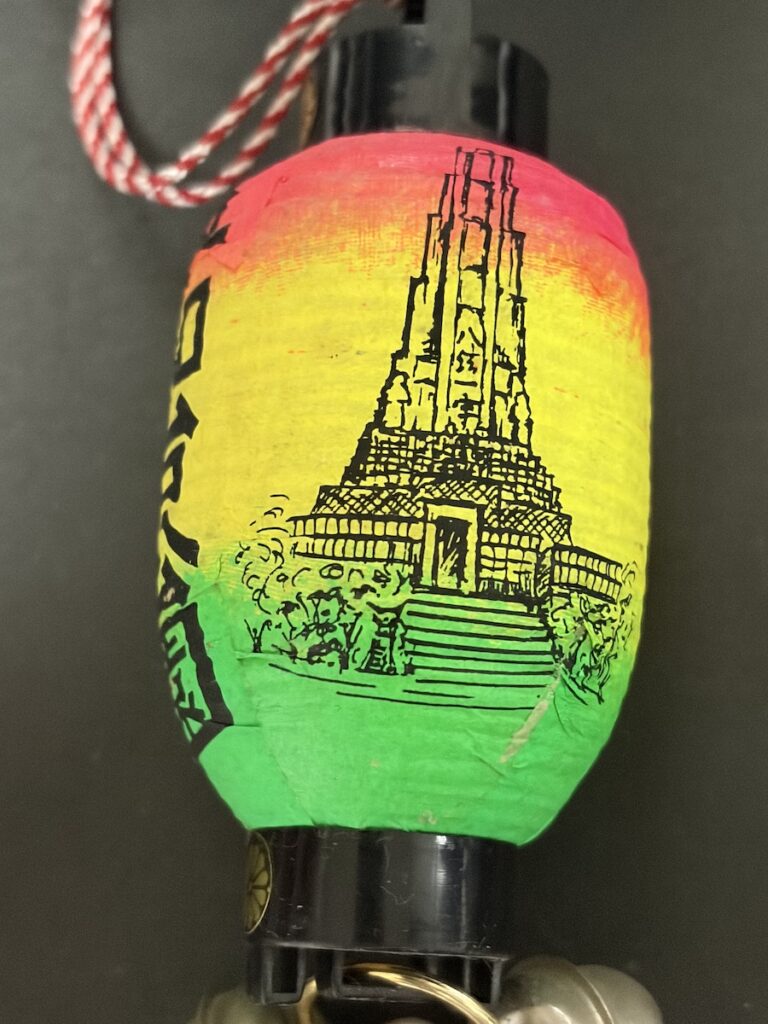
A road lined with cedars leads to a clearing, and in it stands a stone tower—tall, angular, out of place. It rises not elegantly but heavily, as if assembled rather than grown. The stones don’t match. Each one seems to come from somewhere else.
I remember the air being colder there. Not dramatically, but enough to notice. Enough to make the place feel separate from the afternoon heat.
The tower was built long ago, meant to represent unity—stones gathered from across a wider territory, assembled into a single form. Standing beneath it, that intention feels distant. What remains is weight. Stillness. A structure that does not respond to you.
In my archive, there is no trace of it.
No photograph. No accidental capture in the background. Only the brightness of the coast, the cutout figure, the clean lines of the minivan.
The Fragment
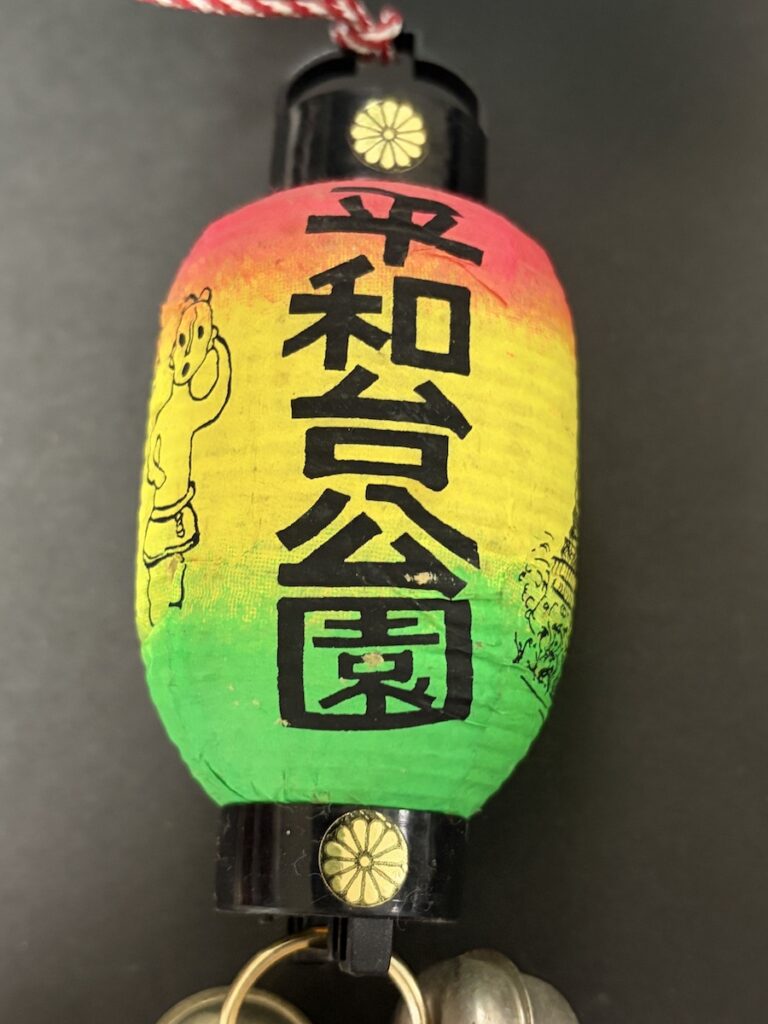
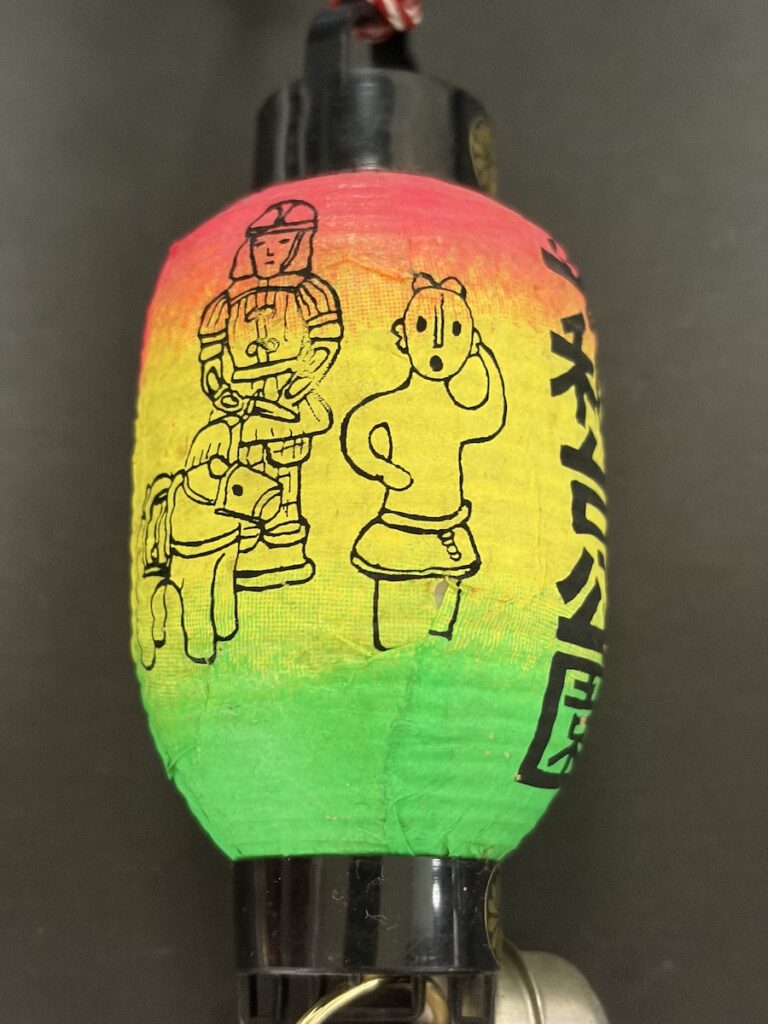
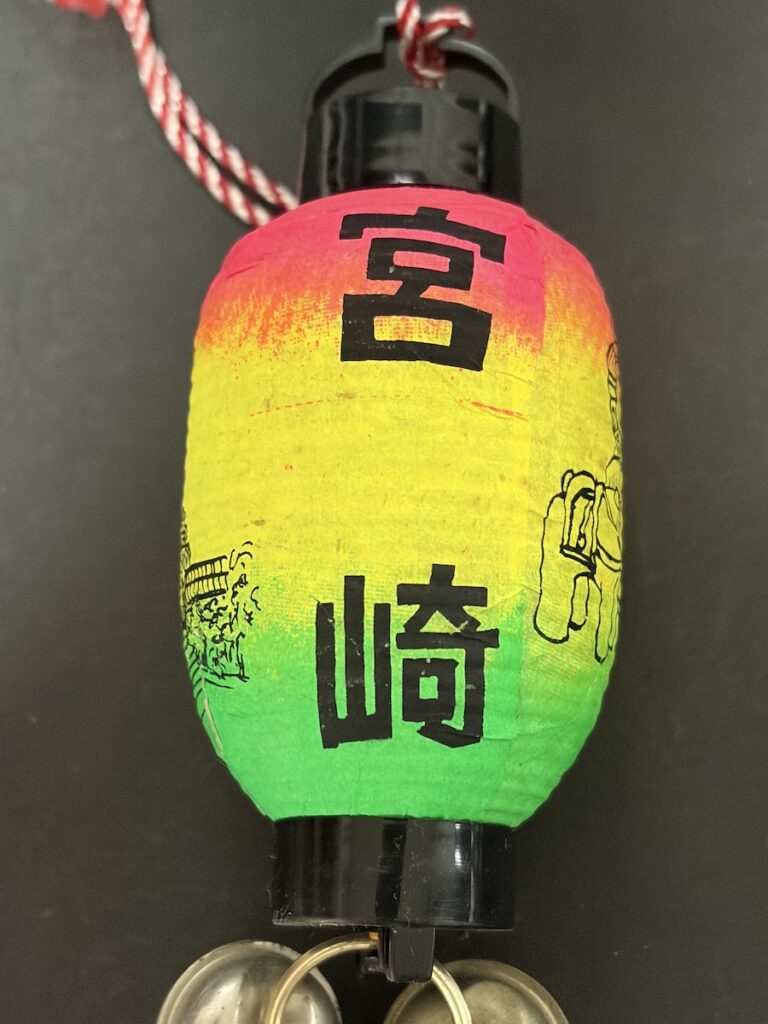
On my desk is a small lantern. It fits in one hand.
Bamboo frame. Paper, slightly yellowed. The colors are loud—pink and green, applied without subtlety. On top sits a small haniwa figure, its eyes hollow, its mouth open in a fixed, expressionless circle.
I don’t remember buying it.
It’s the kind of object that doesn’t demand attention. Something picked up without thinking, meant to mark a place or a moment, then set aside.
For a long time, it was just that.
But when I hold it now, something shifts. Not dramatically. Not enough to rewrite anything. Just a small displacement—the clean interior of the minivan recedes, and something less stable takes its place.
I can’t say where it comes from. Not exactly.
The lantern doesn’t confirm anything. It doesn’t resolve the contradiction between the record and the memory. It sits between them, carrying a trace of both, or perhaps belonging fully to neither.
I look again at the photo.
It is accurate. It captures a moment that happened, a version of myself that existed.
But it does not contain everything.
Some details never make it into the frame. They remain elsewhere—in the body, in fragments, in objects that outlast their context.
The archive keeps what can be fixed in place.
The rest drifts.

コメント