
Hokkaido, the early 2000s. The gunmetal Impreza was caked in grey dust. I killed the engine at the cliff’s edge. The silence was immediately filled by the heavy, oily thrum of a tour bus and the smell of hot asphalt.
The signboards read: The Misty Lake Mashu. The Clearest Water in the World. But there was no mist. The sky was a flat, vacant blue. Below the cliff, the water was a dense, solid slab of sapphire. It didn’t reflect the sky. It was just there—a distant mass of color that looked as hard as stone.
Nearby, squirrels were darting between the tourists’ feet. They snatched sunflower seeds with a frantic, twitching speed, their cheeks bulging as they stood in the middle of the black bus exhaust. The tour bus idled. The squirrels moved. The lake didn’t.
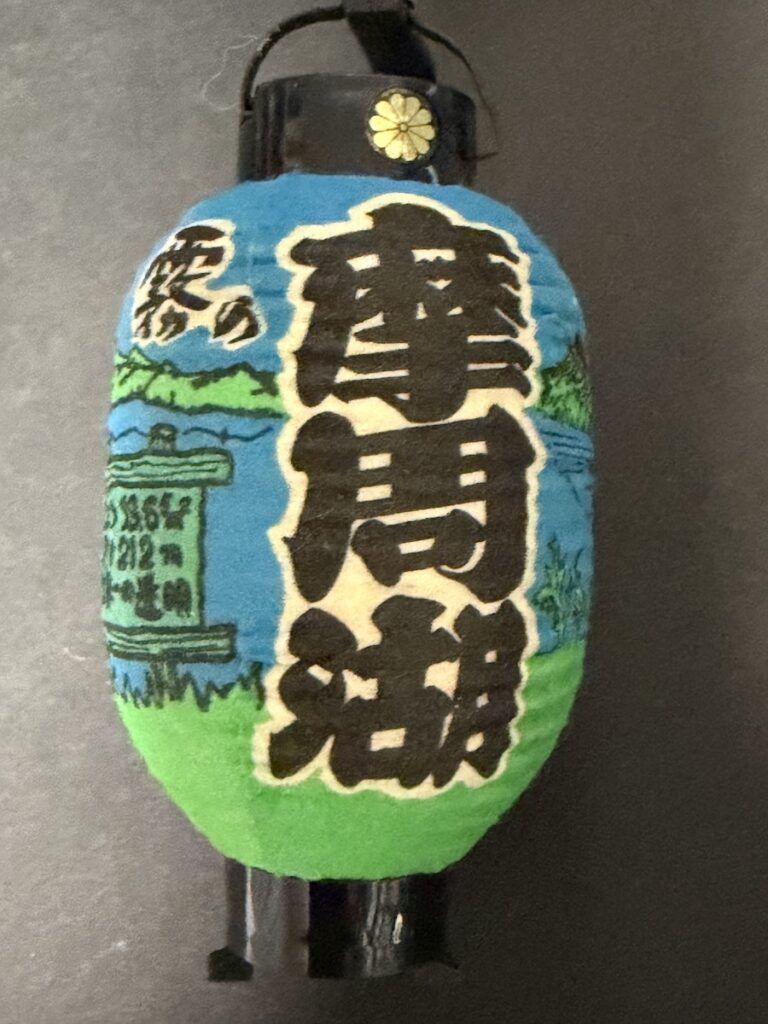
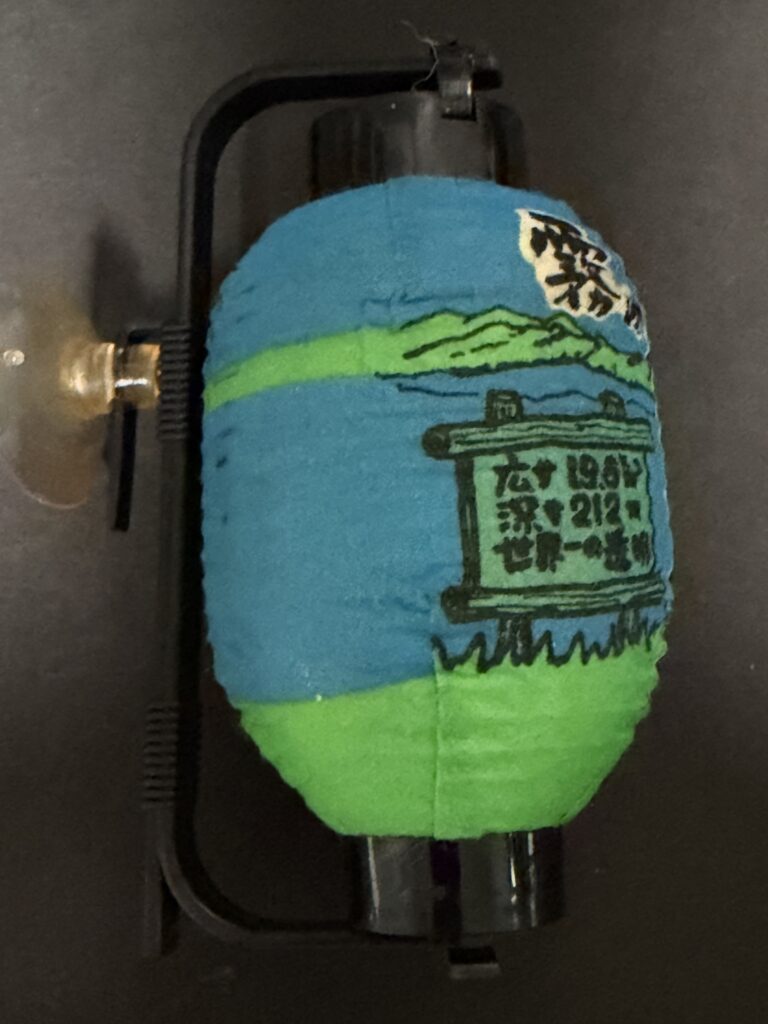
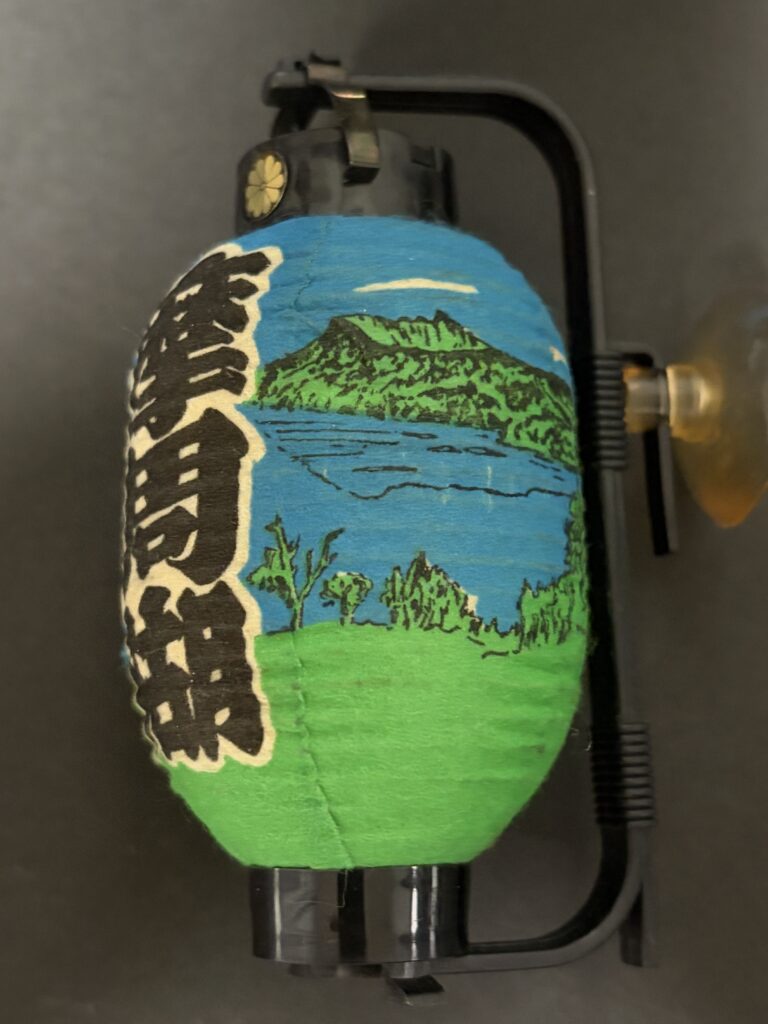
Inside the dim souvenir shop, I found a cho-chin—a palm-sized plastic cylinder. In Japan, these are the standard artifacts of the road, mass-produced to prove you stood in a famous place. This one was a mess: the word Mist was printed in bold black ink, yet the illustration behind it was the same cloudless sky I had just seen. A neon-green signpost sat in the corner of the drawing, jarring and synthetic.
I paid 300 yen. The sharp plastic edges dug into my palm as I walked back to the car. I shoved it into my pocket and felt it against my leg all the way back down the mountain.
Thirty years later. The lantern is on my desk. It has survived moves, career changes, and the discarding of a thousand other things. I look at it through a macro lens. The ink has faded into a ghostly grey, and the scratches on the plastic look like a map of veins.
The artist who drew this thirty years ago didn’t care about the mist. They just captured the glare of the sun.
I’m still looking at that same blue. It is still hard. Still sharp.

コメント