
It began as a distortion of scale—something that didn’t belong.
Driving through the flat farmland of Ibaraki toward the Pacific coast, I first saw it at the horizon, where the fields dissolve into a thin line of trees. At that distance, it looked almost unreal, like a rendering error in the landscape. But as I approached, the proportions of everything around me began to shift. Houses shrank. Power lines flattened. And then the figure itself took over my entire field of vision.
It was not the serene, time-worn Buddha one might expect from Japan’s historic temples. This was something else entirely: a 120-meter-tall statue of Jizō, a Buddhist guardian figure traditionally associated with children and travelers. Here, that gentle presence had been magnified to an almost absurd scale—towering, smooth, and strangely childlike. The familiarity of its expression, enlarged beyond reason, made it unsettling.
Inside the statue, an observation floor sits 85 meters above the ground, in the chest. I took the elevator up, expecting some kind of revelation—distance, perspective, a view that would justify the height. But there was nothing. Just low hills, scattered trees, and an indistinct horizon. The landscape offered no drama, no reward.
What I remember instead is the sound.
There was no machinery, no voices—only the wind. But it wasn’t the dynamic rush of air you feel while driving. This was different. A dull, persistent pressure of sound, as if the statue itself were interrupting the flow of the sky. The wind didn’t pass through; it gathered and lingered. It felt static, suspended. The sensation stayed with me, lodged somewhere behind my ears.
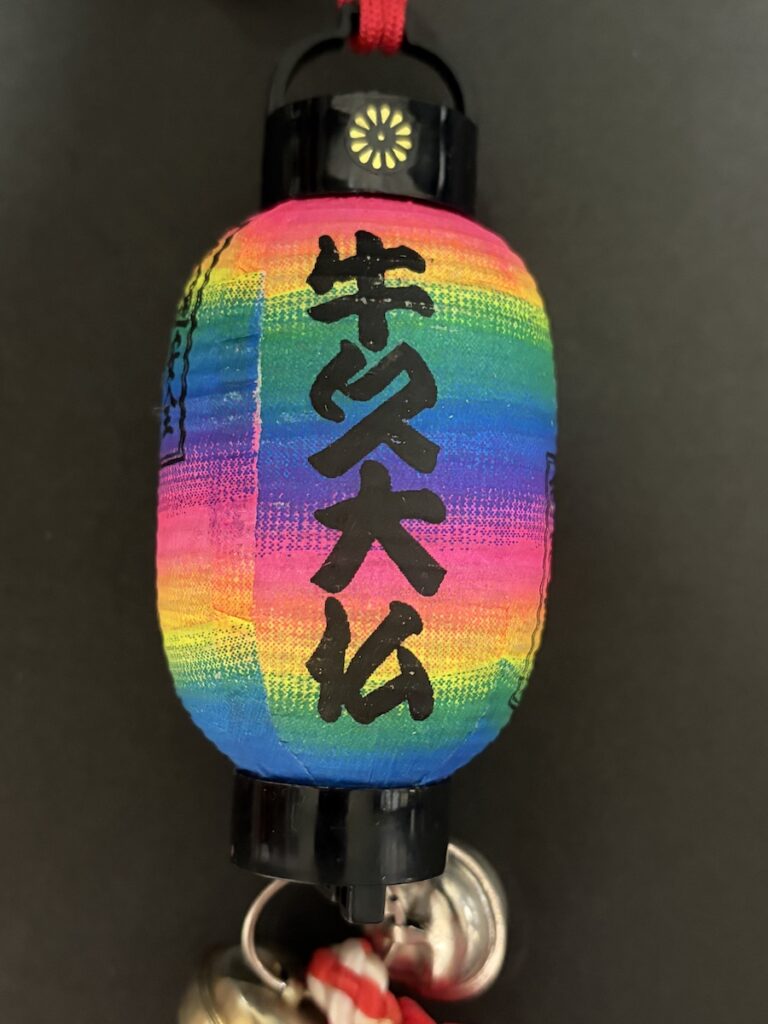
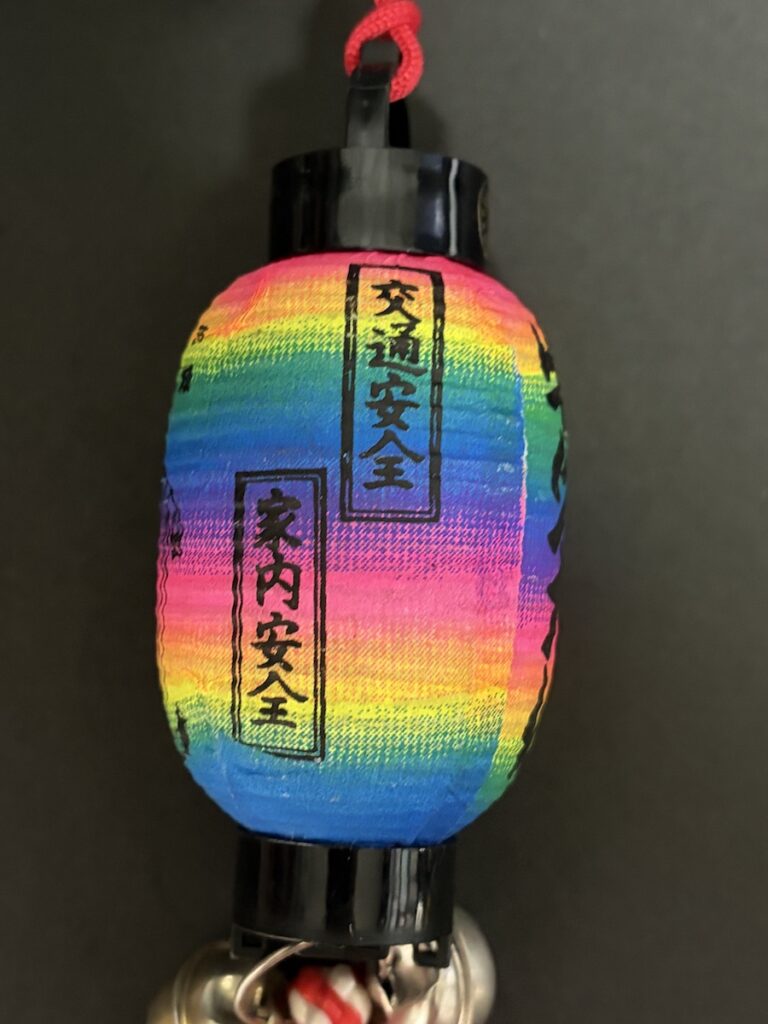
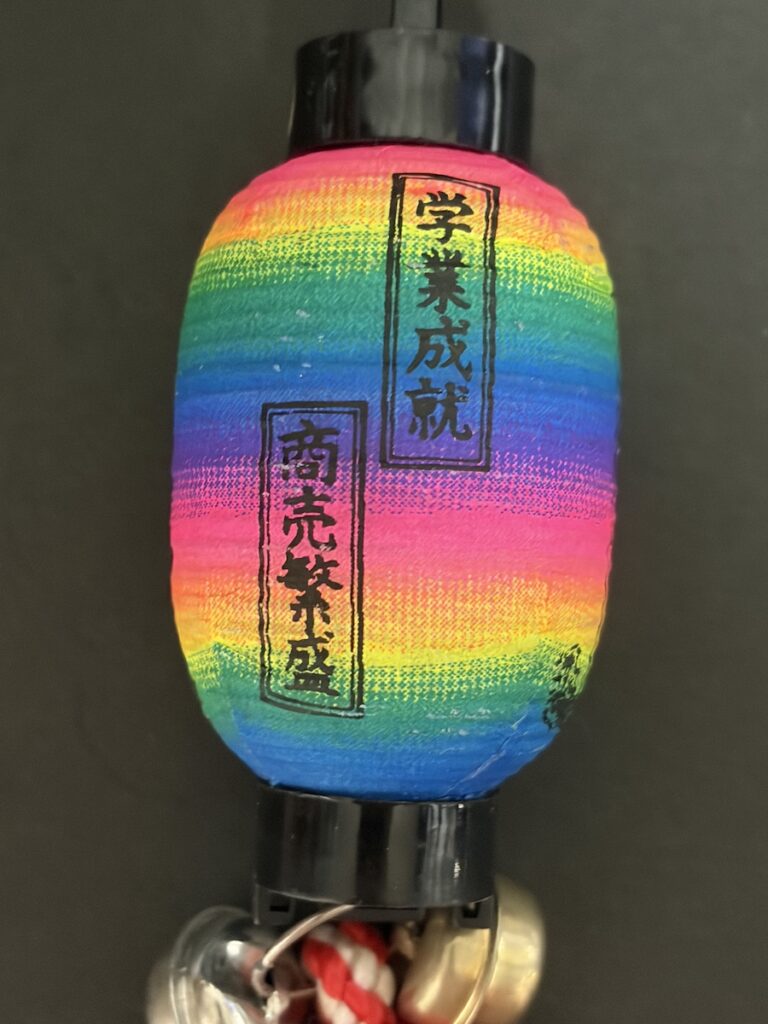
At the base, in a nearly empty souvenir shop, I found a small lantern—plastic, lightweight, easy to overlook. This was the Mini-Cho-chin.
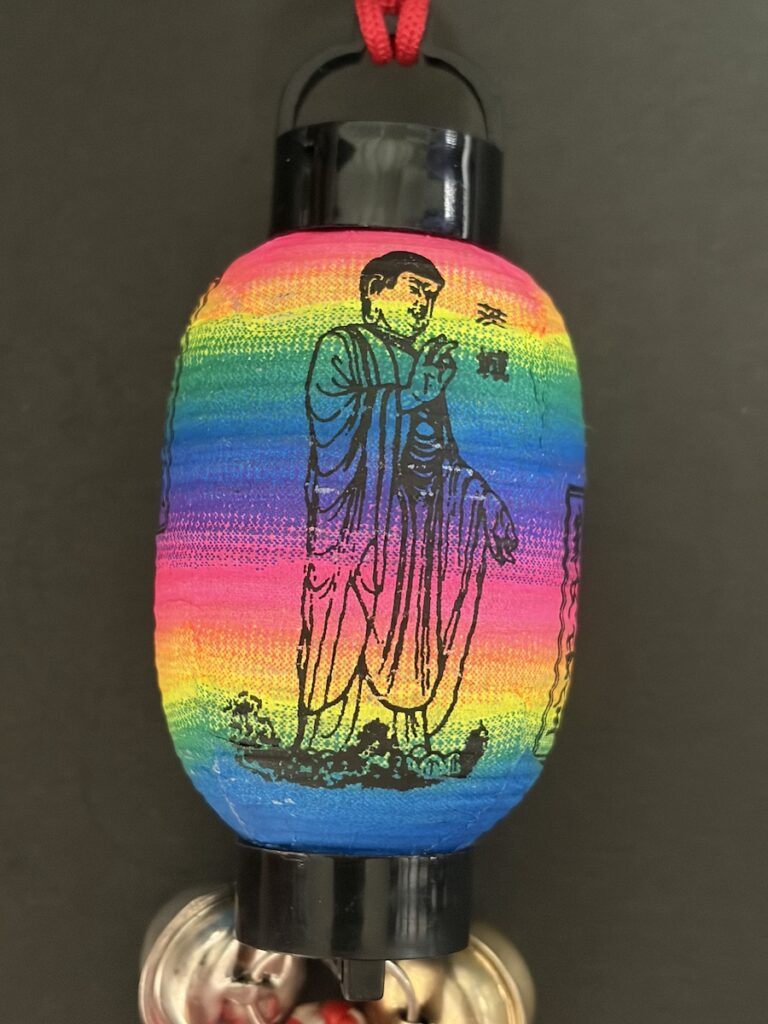
Its surface carried a rainbow gradient, but not the luminous kind you’d expect from a lantern. The colors were thick, almost opaque, layered in a way that dulled their brightness. Instead of glowing, they sat heavily on the surface. Within that compressed space, a small printed figure of the Buddha appeared—reduced, almost incidental.
The contrast was striking. Outside stood the colossal version: overwhelming, impossible to ignore. Here, in my hand, the same figure was diminished, enclosed, and slightly lost within its own decorative excess. The object didn’t celebrate the statue. It flattened it—turning something massive and disorienting into a piece of casual, almost careless kitsch.
Back in the car, the August heat had settled deep into the सीट fabric. I turned the air conditioning to full and began driving toward Cape Inubosaki. In the rearview mirror, the statue remained visible for longer than expected—its pale form hovering above the landscape, receding slowly.
It didn’t feel protective. It didn’t feel sacred.
It felt like something left behind—too large for its surroundings, and somehow aware of it.
As I accelerated, the scale of the world gradually returned to normal. The roads widened. The houses regained their proper size. The horizon settled back into place. The lingering impression of that rainbow-colored surface faded with distance.
The return to ordinary space—measured, predictable, human—was unexpectedly reassuring.

コメント