
Kilometer Zero and the Weight of 1,000 Vanishing Symbols
1,000 items. 30 years. And finally, I arrived at the center of the web.
After driving hundreds of kilometers from the quiet edges of the archipelago, all roads led me here: Nihonbashi, Kilometer Zero. But there was no grand finale. I found myself standing in the cold shadow of an expressway, staring at a bronze marker that felt unexpectedly small for the weight of the entire country it was supposed to carry.
The Catalyst: 1995, The Concrete Shadow
In 1995, Tokyo didn’t greet me with the “ceaseless dynamism” promised in brochures. It greeted me with the roar of traffic overhead. The historic Nihonbashi bridge, once the proud starting point of the Edo era, was literally suffocating beneath a massive layer of Shuto Expressway concrete.
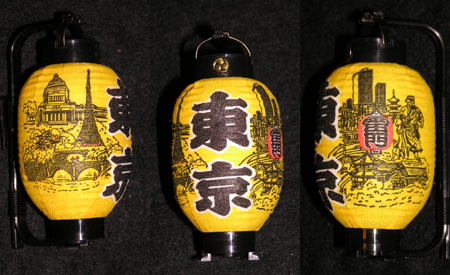
In a nearby shop, I found the object of my search: a “Mini-Cho-chin”—a souvenir-sized, lantern-shaped mascot. This specific Tokyo version was an exercise in forced compression. Tokyo Tower, the Imperial Palace’s Nijubashi, the temples of Asakusa—every landmark was crammed onto a single paper cylinder. Holding it, I realized the lantern wasn’t a celebration; it was a desperate attempt to fix a city in place that was already moving too fast to see.
The Evidence of Erasure
Tokyo does not “vanish” like a remote village; it erases itself through vertical expansion.
In 1995, when I lived here, there was a small Western-style diner tucked under the Shibuya railway tracks. It smelled of demi-glace sauce and old wood. Today, that diner is gone, swallowed by a glass-and-steel skyscraper that looks like every other building in the world.
When a street corner is “redeveloped,” the visual language of the neighborhood is reset to zero. The Mini-Cho-chin in my hand is the only place where the Tokyo of 1995 still exists as a coherent set of symbols.
The Aesthetics of Overload
Usually, I praise the “Aesthetics of Subtraction” in these items. But the Tokyo lantern is different. It is an Aesthetics of Overload.
Because Tokyo has no single essence, the craftsman had no choice but to throw everything at the paper. Look at the crowded composition: the height of Tokyo Tower is undermined by the sprawl of other icons. It is a messy, beautiful, and slightly claustrophobic design—perfectly mirroring the sensory overload of the city itself.
The Realization
Standing at Kilometer Zero, looking at the small, soot-covered marker under the highway, I understood why I needed this archive.
Tokyo is a city of “Scrap and Build.” It is a place that refuses to be remembered. If I didn’t hold onto this fragile, over-stuffed Mini-Cho-chin, the Shibuya I lived in and the Nihonbashi I stood upon would eventually be reduced to nothing but digital noise.


コメント